Redis Monitoring: Tools and Solutions
Redis (Remote dictionary server) is an open-source, in-memory key-value data store. It is widely used as a database, cache, and message broker. Redis is known for its high performance and scalability, making it an excellent choice for modern applications.
However, with great power comes great responsibility, and managing Redis can be a challenging task, especially when it comes to monitoring. In this blog post, we will explore Redis monitoring, why it is important, and Redis monitoring tools and solutions.
Why is Redis Monitoring Important?
Popular web services such as Twitter, GitHub, Pinterest, Snapchat, StackOverflow, and others use Redis because of its ability to deliver small pieces of information VERY quickly. Similar to Memcached, Redis stores data in memory.
Redis is a critical component of many modern applications, and downtime or performance issues can have a severe impact on business operations. Monitoring Redis can help identify performance bottlenecks, prevent downtime, and ensure optimal performance.
Redis monitoring can help uncover issues such as high memory usage, slow queries, and other potential problems before they become critical.
When compared to Memcached, Redis can do a lot more:
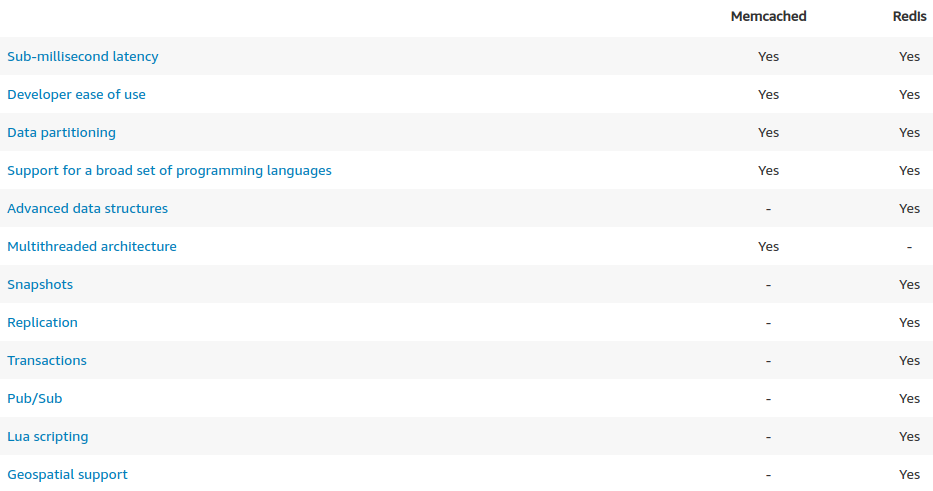
Image source: Choosing between Redis and Memcached
How to Monitor Redis?
There are several ways to monitor Redis, including using built-in Redis commands, third-party tools, and cloud-based services. Redis provides a set of commands that can be used to monitor Redis instances. The most commonly used commands are INFO, MONITOR, and CLIENT LIST. These commands provide information such as the number of connected clients, memory usage, and other statistics.
Tools such as RedisInsight, Redis Commander, and Redis Desktop Manager can be used to monitor Redis instances. These tools provide a user-friendly interface and advanced features such as real-time monitoring, alerting, and visualization.
Cloud-based services such as Redis and AWS ElastiCache for Redis can also be used to monitor Redis instances. These services provide a fully managed Redis instance with built-in monitoring, alerting, and automatic failover capabilities.
Redis Monitoring tools
Let’s look at more additional Redis monitoring tools and solutions in this updated and maintained list:
Redmon Redis monitoring- RedisLive
- Redis Commander
- AppOptics Redis
- Datadoghq Redis monitoring
- Appdynamics Redis Extension
Redis Desktop GUI- Redis-cli.
Redis use cases
- Twitter uses Redis and Memcache clusters at an enormous scale: caching users, timelines, tweets, and more.
- Github uses
Redis as a persistent key/value store(Update) for routing information and a variety of other data. - Stackoverflow uses Redis as a caching layer for the entire network. Also, see StackExchange.Redis.
- Airbnb sorts top scores into Redis for consumption by the front end (Update).
- For more, check out Techstacks.
Conclusion
Redis monitoring is an essential part of managing Redis instances. Monitoring can help identify performance issues, prevent downtime, and ensure optimal performance. There are several ways to monitor Redis, including using built-in Redis commands, third-party tools, and cloud-based services.
When choosing a monitoring solution, it is important to consider factors such as ease of use, features, and cost. With proper monitoring, Redis can provide high performance and scalability for modern applications.
Originally published: Oct 29th, 2017 | Last updated: March 17th, 2023