Best Linux Compatible Laptops 2027
For enthusiasts, developers, and professionals who prefer the Linux operating system, choosing a Linux-compatible laptop is a pivotal decision. Here are five Linux-compatible laptops that I evaluated for 2027. Each is evaluated across five key areas: Linux compatibility, performance, battery life, build quality and design, and price and value (on a scale of 1 to 5 stars), helping you make an informed choice for your Linux needs.
Note: I am not affiliated in any way with any of these laptop manufacturers. Some links in this article are Amazon affiliate links, which earn a small commission at no extra cost to you.
Dell Pro Max 14 Laptop

The Dell Pro Max 14 is a modern business-class laptop positioned for professionals who want strong Linux compatibility paired with enterprise-grade build quality and long-term reliability. Designed for developers, IT professionals, and power users, this model replaces the previously recommended Dell Latitude 7350. Ubuntu certified.
Built around current-generation Intel Core Ultra processors (configuration dependent), the Pro Max 14 Pro delivers consistent performance for development work, virtualization, and everyday productivity. It supports up to 32 GB of DDR5 memory and fast NVMe storage options up to 2 TB, making it well suited for demanding Linux workflows. It’s sold new on Amazon as well, for example this Dell Pro Max 14 (Core Ultra 7 265H, 32 GB, 512 GB) configuration.
Lenovo ThinkPad T14s Gen 3 (AMD)
Update: More than 3 years later I can still recommend the T14s Gen 3 over the Gen 4 and Gen 5. However, the Gen 3 is showing its age in specs, and so I can as well now recommend the Gen 6, or better yet the current ThinkPad T14s Gen 7 (Intel Core Ultra 7 365), which is the model to buy new today. The Gen 7 is also available with AMD Ryzen AI 400 processors. First, take a look at this Gen 3 vs. Gen 6 side-by-side comparison.
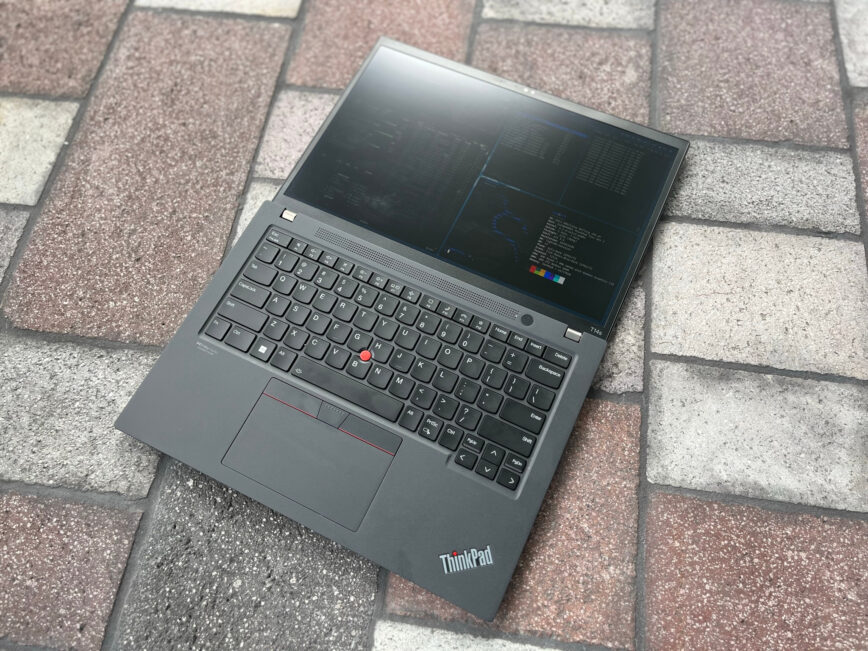
Overview: I purchased this laptop as an open-box item on eBay. The ThinkPad T14s Gen 3 AMD is a powerhouse, especially with its AMD Ryzen processors. Known for its legendary build quality and Linux compatibility, it’s a top pick for professionals seeking a high-performance laptop. The fingerprint reader and Bluetooth can take extra work to get working seamlessly.
Here’s an excerpt from my review: “The Lenovo ThinkPad T14s Gen 3 AMD stands as a formidable business laptop. Its robust build quality, combined with the lightweight yet durable materials, makes it a reliable choice for professionals on the go. The 1080p 16:10 aspect ratio display provides a visually pleasing and practical experience, and with 400 Nits max brightness, it survives in well-lit and outdoor environments. The keyboard and TrackPoint continue to uphold the ThinkPad legacy, offering comfort and precision for extensive typing and navigation tasks. The AMD Ryzen 7 6850U processor, coupled with Radeon 680M graphics, packs a punch in handling demanding tasks and multitasking, without compromising on battery life. The simple yet efficient cooling system and quiet fan operation further underscore the laptop’s suitability for professional settings.”
TUXEDO InfinityBook Pro 14 (AMD)
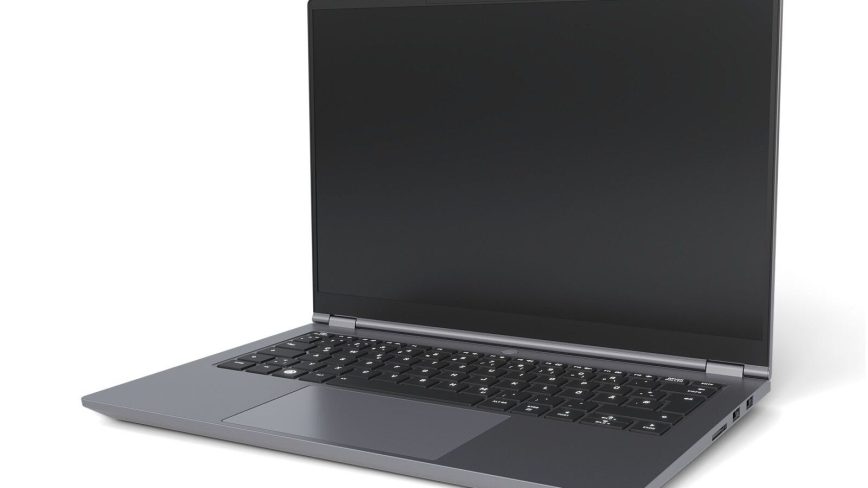
Overview: TUXEDO Computers is a German company that builds laptops specifically for Linux. Every machine ships with Linux preinstalled (their Ubuntu-based TUXEDO OS, or Ubuntu if you prefer), and TUXEDO maintains its own open-source drivers and the TUXEDO Control Center for fan, power and keyboard settings. That makes it one of the few brands where Linux is the main target, not an afterthought. It replaces the Purism Librem 14 on this list, which has been discontinued with no release date for its successor.
The current InfinityBook Pro 14 (Gen10) uses AMD Ryzen AI 300 processors, up to the 12-core Ryzen AI 9 HX 370, with up to 128 GB of DDR5 memory and room for two NVMe SSDs. The 14-inch 2880 × 1800 display (16:10, up to 120 Hz) gives plenty of vertical space for terminals and code, and the 80 Wh battery is large for a 1.45 kg aluminum laptop. It costs more than similarly spec’d Windows laptops, and it is easiest to buy in Europe, but you get a machine that is built, tested and supported for Linux.
Framework Laptop 13 (AMD)
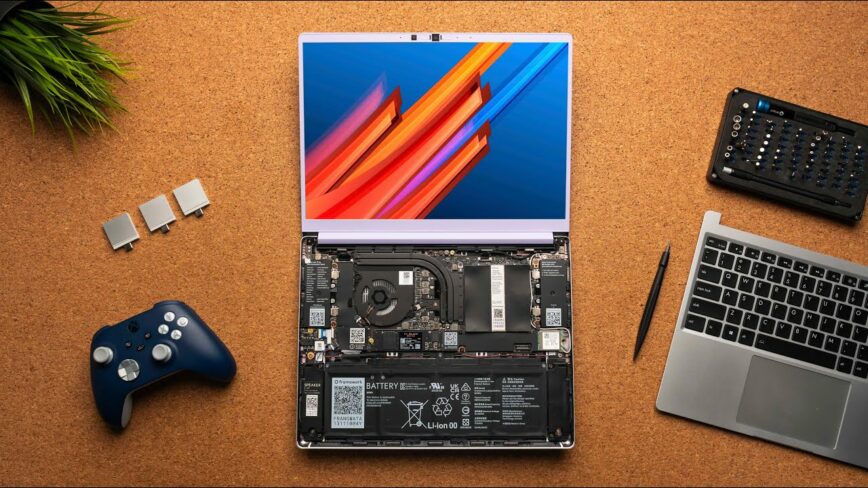
Update (2027): In 2026 Framework released the Framework Laptop 13 Pro, with Intel Core Ultra Series 3 processors, a CNC aluminum chassis, up to 64 GB of LPCAMM2 memory and a battery rated at up to 20 hours. It is Framework’s first Ubuntu Certified system. The standard Framework Laptop 13 is still sold, and older mainboards can still be upgraded in place.
Overview: The Framework 13 AMD Ryzen laptop has become one of the most popular Linux-compatible laptops. It stands out for its modular design, allowing users to upgrade and customize components easily. Its commitment to sustainability and right-to-repair principles makes it a unique offering in the market. This laptop is a great choice for those who value customization and future-proofing their technology.
This 13″ work laptop comes with a 3:2 aspect ratio display screen, which is outstanding vertical real estate for work and productivity like coding and Linux terminal. The laptop needs a few more years for a full rating on build quality. That said, the unit I tested seems like it should last a couple of years without major issues. Update: Added a star to “Build Quality and Design”.
System76 Lemur Pro (14″ and 16″)

The 2026 Lemur Pro is System76’s lightest laptop, designed for Linux from the firmware up and shipped with Pop!_OS (with the COSMIC desktop) or Ubuntu LTS. It moves to Intel Core Ultra Series 3 (Panther Lake) processors, up to the 16-core Core Ultra X7 358H, and System76 rates the 73 Wh battery at up to 18 hours.
For the first time it comes in two sizes: a 14-inch 1920 × 1200 model weighing 2.2 lbs, and a new 16-inch 2560 × 1600 (165 Hz) model at 2.96 lbs, both 16:10. It ships with 32 GB of LPDDR5X memory and PCIe 4.0 NVMe storage, plus Thunderbolt 4, USB-C with Power Delivery, two USB-A ports, HDMI, a microSD reader, Wi-Fi 7 and Bluetooth 6. Pricing starts at $1,999.
Summary of these Linux compatible laptops
It’s essential to emphasize that the laptops listed here are not ranked in any order. Instead, each one represents a strong, all-around choice for different needs and preferences within the Linux community. From the versatile Lenovo ThinkPad T14s, to the innovative Framework 13 AMD Laptop, each model brings something unique to the table.
These laptops have been selected for their comprehensive strengths and compatibility with Linux.
Conclusion
The choice of a laptop is about personal preference and specific use cases. As Linux continues to evolve and grow in popularity, the range of compatible hardware expands, offering more choices than ever before. The laptops highlighted here stand out in 2027 for their performance, design, and Linux compatibility, making them excellent choices for anyone in the market for a Linux-compatible laptop.
Let’s expand on this list and discuss further:
- Which laptop from the list above would be your top choice?
- Are there any other Linux-compatible laptops you’re considering?
- What features do you prioritize when selecting a Linux laptop?
Published: December 11th, 2023 | Last updated: November 19th, 2026


Also notable mentions:
Would anybody here consider Novacustom?
Welcome to the community. Are you from Novacustom?
Personally, for me, I no longer consider displays without tall aspect ratios. So 16:10, 4:3, 3:2. The 16:9 is just too wide for me. 95% of the times more lines of config, code, terminal output etc. is more valuable to me than the video and media friendly 16:9 screens.
I have been using a ThinkPad for a long time now, with multiple Linux distros installed, and I can confidently say that it is my favorite laptop. I have found that ThinkPad has better Linux support compared to other models, especially when it comes to drivers. As for a laptop, the most important feature for me is the battery life, and ThinkPad does not disappoint in this regard as it has two separate batteries that provide excellent battery time.
I would pick the System 76 Lemur Pro if I want to run a Linux OS. Packed with AMD Ryzen Processors, supported with NVIDIA Getforce RTX Graphics Card. The hardware is seriously optimized to run a Linux OS. Would go for this for a Linux based PC over and over again.